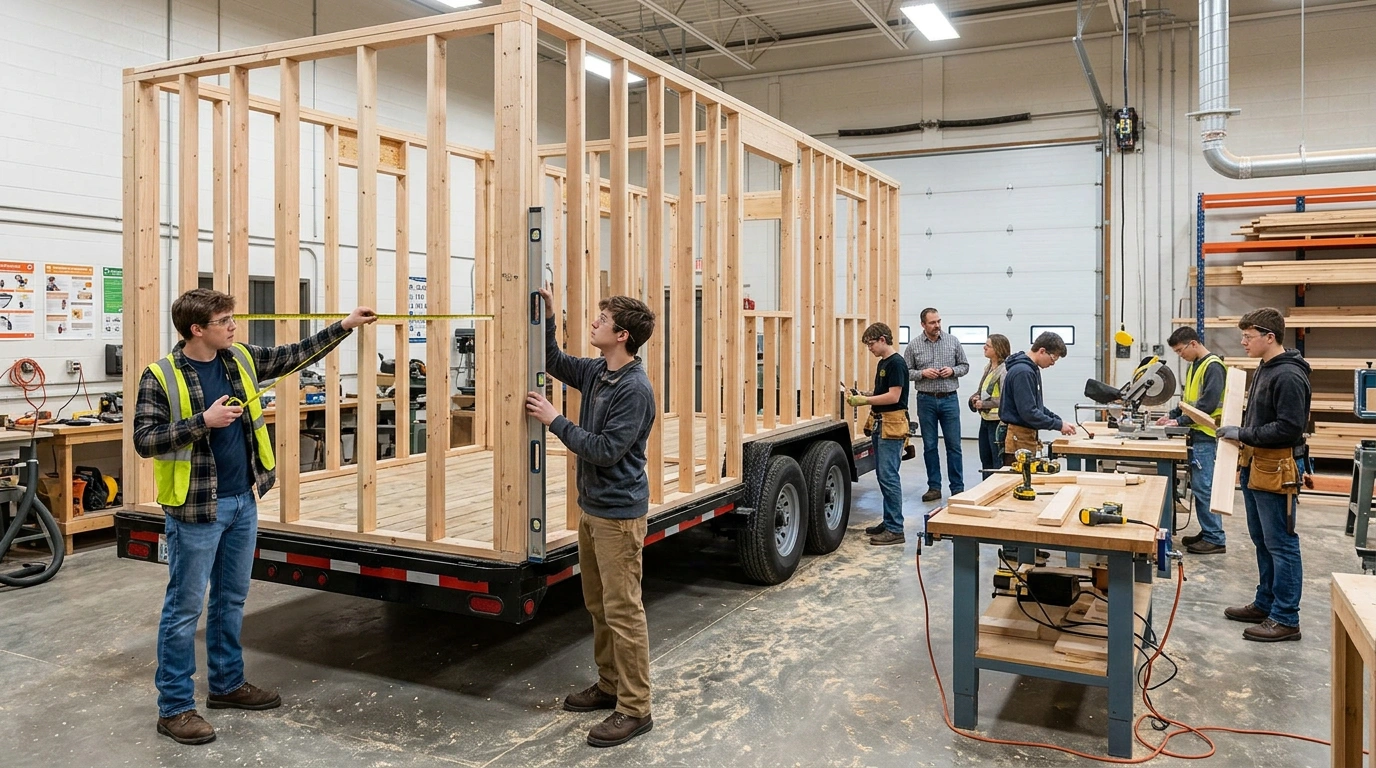
A tiny house build class turns a complete building in a small footprint into a classroom project: students can see every major stage of construction, from the trailer to the final checks, without needing a full-size job site.
One project, many trades in a tiny house build class
In the THinc Education Build Program, students work through the stages of a single build. Along the way they are exposed to:
- Framing and structure, including reading drawings and squaring walls
- Plumbing and electrical rough-in, where systems are planned and installed before walls close
- The building envelope, including sheathing, roofing, windows, doors and cladding
- Insulation and interiors, from wall coverings to cabinets and trim
- Final fixtures, testing and documentation
Each stage depends on the last, which helps students understand why order and accuracy matter.
Because the building is small, students can see how the systems relate. The plumbing that runs through a wall is the same wall they framed a few weeks earlier. The electrical box they set has to line up with the interior finish they will install later. Connections like these are hard to see when students practice one skill in isolation.
What a typical build week can look like
A guided build pairs instruction with hands-on work. Students might watch a short instructional video on a task, review the plan together, and then carry out the work in small teams. Instructors check the result against the plan before the group moves on.
Roles can rotate. One student reads the drawing, another measures and marks, and another checks the work. Rotating roles gives every student practice with planning and quality checks as well as with tools.
Skills beyond technique
Students also practice habits that employers and instructors value. They learn to follow a plan, check their work, document what they did and work as part of a team. Documentation matters especially in the later chapters, where quality records support review of the completed home.
Students also practice communication. They explain what they are doing, ask questions when a plan is unclear and give each other feedback. These habits carry into any workplace, whether or not a student stays in construction.
Who benefits most
Students who learn best by doing often engage with this kind of project. Students who are unsure about a career path can try several trades in one course. Students headed toward planning, estimating, inspection or management roles gain a working understanding of the field. For more on those paths, read Careers in the Trades That Aren’t All Physical.
Support for the instructor
The program pairs guided instruction with hands-on work. It includes instructional videos, lesson plans, project drawings and professional build support, so teachers are not building a curriculum from scratch.
Schools budget separately for the trailer, materials, tools, testing equipment, space and staffing. Certification of the completed home depends on completing the applicable requirements, and placement or occupancy depends on applicable approvals.
Frequently asked questions
Do students need construction experience first? No. The program is designed around guided instruction, so students can begin without prior building experience. Instructors benefit from reviewing the materials and, if they like, joining optional teacher training.
How long does the project take? The program is licensed for two years. The pace depends on your class schedule, space and staffing, so schools plan their timeline around their own calendar.
What does a school budget separately? Schools budget for the trailer, materials, tools, testing equipment, space and staffing. The Build Program page lists the details.
The takeaway
Building a tiny house gives students a clear, finished result they can point to and explain. To see how the chapters fit together, visit the Build Program, or register your interest and we will help you decide what fits your school.