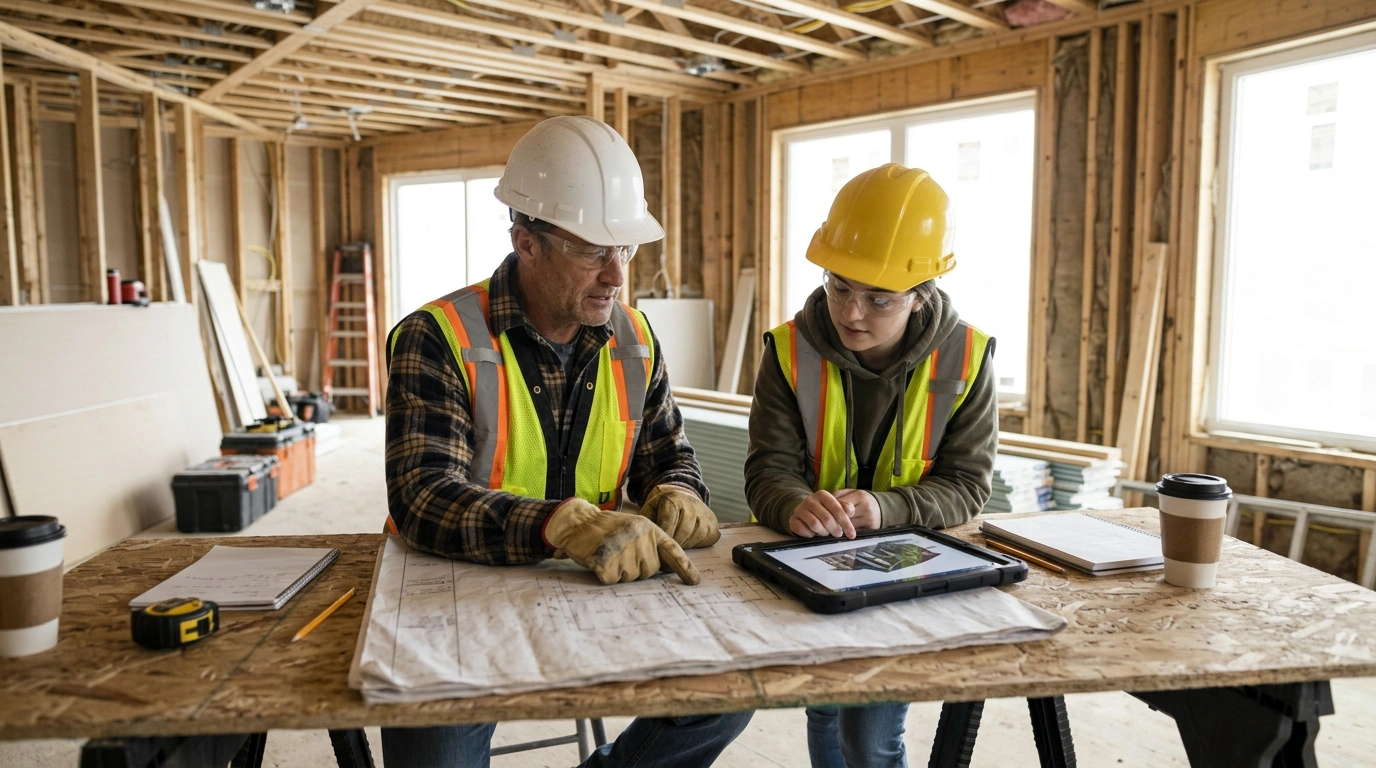
When people picture a career in the trades, they often picture hard physical labor all day. Yet there are many trades careers that are not physical all day, and the reality is broader. The construction and building world includes a wide range of roles, and many of them rely as much on thinking, organizing and communicating as on strength.
A wide field
Building anything takes many people, not only those swinging hammers. Students who learn the basics of how a building comes together can move into roles across the industry.
Trades careers not physical: roles worth knowing about
- Estimator: Reads plans and works out what a project will cost in materials and time.
- Project manager or coordinator: Schedules the trades, tracks progress and keeps everyone informed.
- Inspector or quality-control specialist: Checks that work meets applicable requirements and is documented.
- Designer or drafter: Turns ideas into drawings a crew can build from.
- Safety coordinator: Helps a crew work safely and meet requirements.
- Sales and customer service: Helps clients understand options and choose what fits.
- Supplier or materials specialist: Knows the products and helps crews get what they need.
- Instructor or trainer: Teaches the next generation of builders.
Not every one of these roles requires the same training, and requirements vary by employer and location.
Why hands-on experience still helps
People in planning, inspection or management roles often do their jobs better because they understand the work. Someone who has framed a wall or run a supply line knows what a drawing is really asking for.
That is one reason a project-based program is valuable even for students who never plan to work on a job site every day. If you want to see why many educators put trades at the center of career readiness, read Trade Classes Are the Future of Career Readiness. For a look at how a student’s day can include planning and documentation as well as building, see A Day in the Life of a Hands-On Construction Student. They see how every trade connects, how work is documented and how a project is managed from start to finish.
The takeaway
The trades offer room for many kinds of people and strengths. Share this with students who think the trades are not for them. To see how a full build introduces many of these ideas, take a look at the Build Program curriculum.