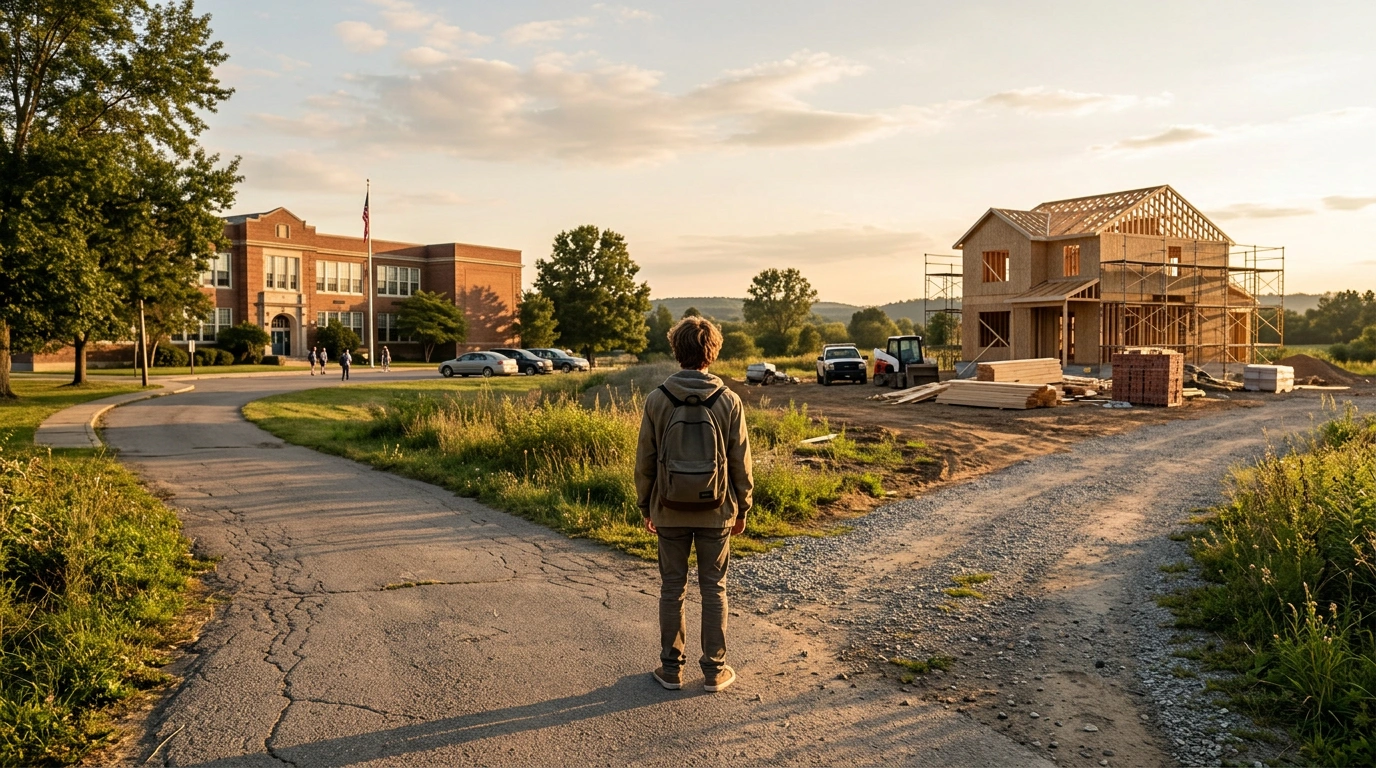
For years, the message to students was simple: go to college, and everything else will sort itself out. That path works well for many people. It is not the right path for everyone, and students deserve to hear that without any stigma attached.
Different students, different strengths
Some students thrive in lectures and long reading assignments. Others do their best thinking with their hands, solving a problem in front of them. Both kinds of learners are capable. They simply need different environments to show it.
When a school only promotes one route, students who learn differently can feel like they are falling behind, when in fact they have not yet been shown where they shine.
Questions worth asking
Helping a student plan their future is easier when the conversation is open. A few useful questions:
- What kind of work does this student enjoy day to day?
- Would they rather study first, or learn while working?
- What does each path cost, and how long does it take?
- Which options keep doors open for later?
A trade program does not close the door on college. Many students start in a trade and add training or a degree later, and many continue in the field for years.
Pathways, not either-or
The goal is not to argue against college. It is to make sure students see a full range of respectable options: a four-year degree, a community college program, an apprenticeship, a certificate program or going straight into skilled work.
Hands-on classes give students a way to test a career before they commit. A student who builds a wall, wires a circuit or installs a window learns quickly whether they enjoy the work.
The takeaway
A strong school offers many ways to succeed. If you are looking for a way to give students a real taste of construction, explore the Build Program or the Construction Labs for schools that need a smaller starting point.