Every family weighing life after high school eventually asks the same question: what will this path cost, and what will it give back? For many students, apprenticeships and other trades pathways deserve a seat at that table next to a four-year degree.
Two different ways to pay for a future
College usually means paying tuition up front, often with loans, in exchange for a credential and a broad education. An apprenticeship works the other way around. The student is hired, works under experienced people, and learns on the job while classroom instruction runs alongside.
Neither is automatically better. They are different trades of time, money and risk, and the right one depends on the student.
Questions worth asking about any path
Before choosing, families can compare the options on the same terms:
- What does it cost in tuition, tools, fees and time?
- Is the student paid while learning, or paying to learn?
- What credential or experience does the student have at the end?
- What are the next steps if plans change?
- How do local employers view this path?
Local answers matter more than national headlines, so it helps to talk to employers, program directors and recent graduates in your own area.
Where high school trade classes fit
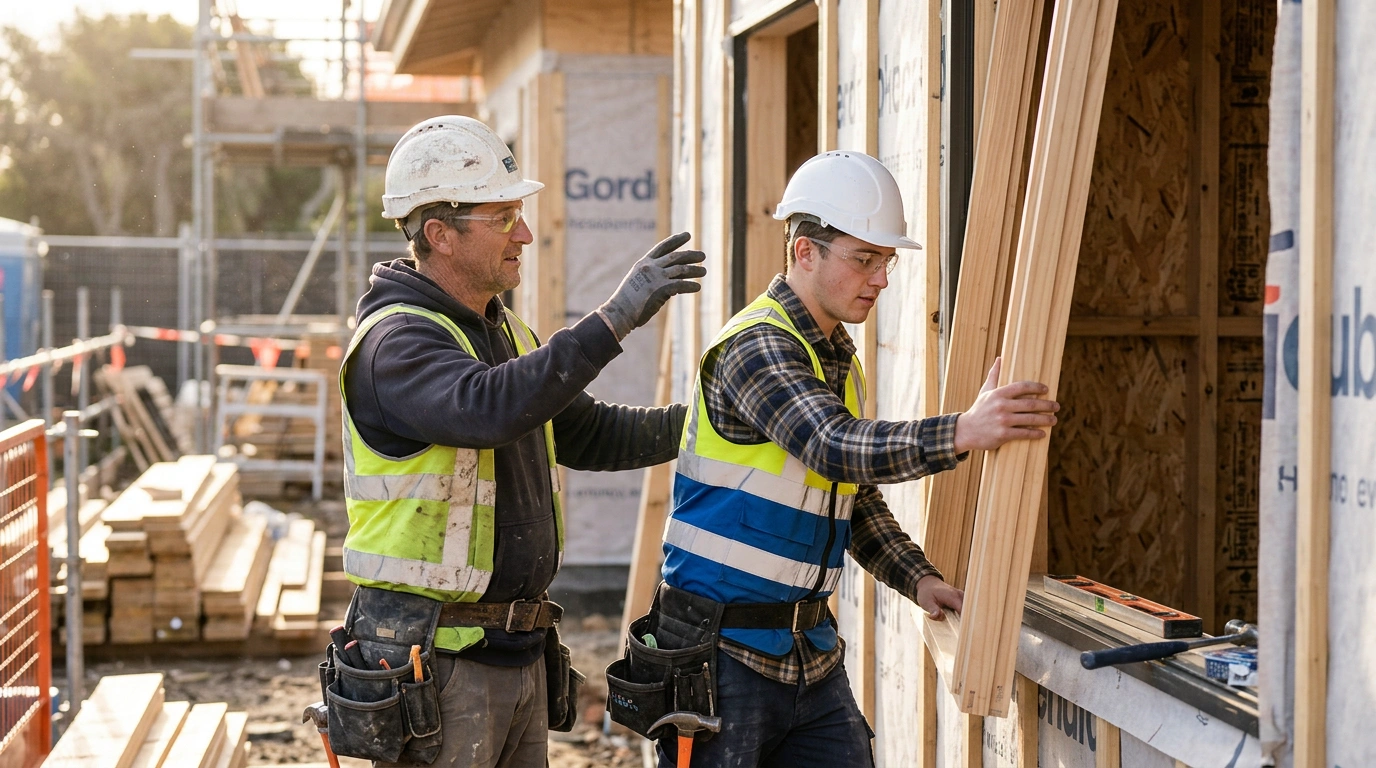
A trade class is a low-risk way to test the work before committing to it. A student who spends a semester framing, wiring or finishing a project learns quickly whether they enjoy it, and that knowledge helps with any later choice, whether it is an apprenticeship, a community college program or a four-year degree.
Projects like the THinc Education Build Program give students a taste of the full sequence of trades in one place, from framing through interior finishes and final checks.
Keeping the door open
Choosing a trades pathway does not close off college, and choosing college does not rule out the trades. Many people move between them over a career. The goal for schools is to make sure students see all of the options early enough to choose well.
If you are building out pathways at your school, contact us to talk about what a hands-on trades project could look like.